
These two get lumped together because they’re both ways of taking control of your money, but they answer different questions. Confusing them is why a lot of people try budgeting apps, follow the rules correctly, and still get blindsided by their bank balance.
Zero-based budgeting: where should this money go
Zero-based budgeting is an allocation exercise. Every dollar you have gets assigned a job — rent, groceries, savings, fun money — until the total hits zero. It’s done at the start of a period, usually monthly, and it answers: given what I have right now, how should I plan to spend it?
It’s a category-level tool. It tells you whether you’re overspending on dining out relative to plan. It doesn’t tell you whether your balance is about to dip below zero on the 23rd because three bills land before your next paycheck.
Cash flow forecasting: what will my balance actually be
Cash flow forecasting is a timing exercise. It projects your balance forward day by day, based on when income actually lands and when bills actually come out — not just what’s assigned to which category. It answers: given the timing of my money, when will I be tight, and by how much?
A budget can be perfectly balanced on paper and still produce an overdraft, because budgeting doesn’t account for the fact that your rent and your car payment might both hit three days before payday.
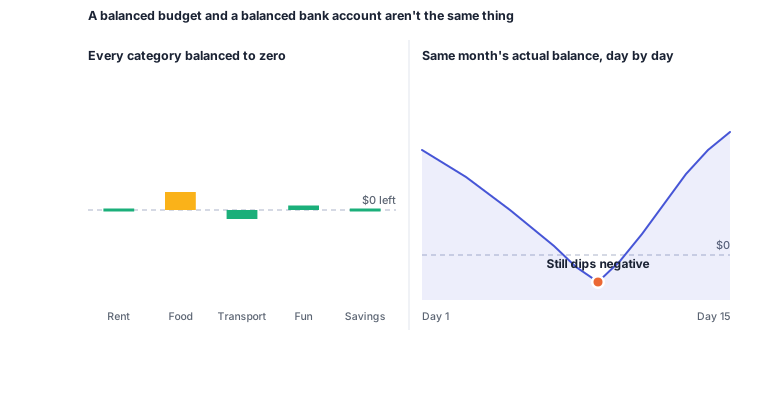 Every category hit zero exactly as planned. The balance still went negative on day 8.
Which one do you need
They’re not competing tools — they solve different halves of the problem:
- Use budgeting to decide how much you want to spend in each category.
- Use forecasting to see whether the timing of your income and bills will actually let you get there without a dip.
Most people who feel like their budget “isn’t working” don’t have a spending problem — they have a timing problem, and no amount of category planning fixes that. Tally is built for the timing half: it tracks your recurring bills and projects your actual balance forward, so you can see a dip before it happens instead of after.