
Nobody sits down and decides to spend $145 a month on subscriptions. It happens $12 at a time, over a couple of years, and the total only ever shows up if someone adds it up on purpose.
Why it’s invisible in the moment
A single new subscription is easy to justify: it’s $12, or $16, or $9, against a balance that’s in the hundreds or thousands. It doesn’t register as a decision worth defending, because on its own, it isn’t one. The problem is that “on its own” never actually applies — it’s landing on top of eight other small decisions that all felt just as minor when they were made.
What it looks like added up
Streaming here, a music plan there, a meal kit that seemed reasonable in January, a gym app from a New Year’s resolution, cloud storage that crept up a tier — none of it looks like much individually. Stacked over time, it looks like this:
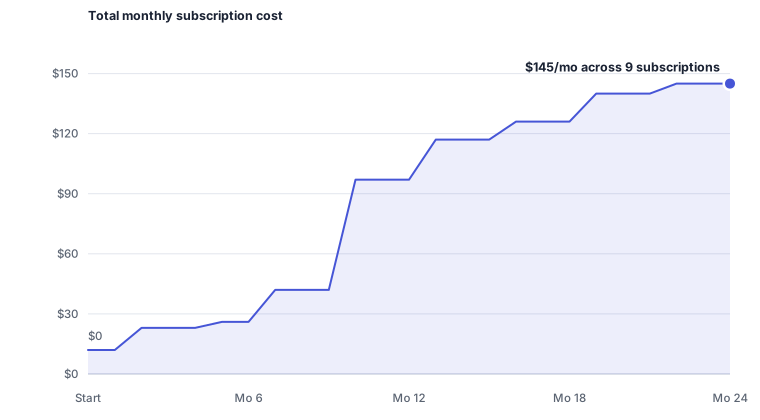 No single addition moves the line much. The total at month 24 is nine decisions nobody made all at once.
$145 a month is $1,740 a year — more than most people would agree to if you asked them upfront to commit to it in one sitting. Nobody did agree to it in one sitting. That’s exactly the mechanism: each individual charge is too small to trigger a second look, so the total only ever grows.
Why “just cancel what I don’t use” doesn’t work
The usual advice is to do a subscription audit, but that assumes you remember what you signed up for — including the ones billed annually, which show up on a statement once a year and are easy to forget exist by month eleven. A one-time cleanup catches what’s active today. It doesn’t catch the next one that quietly renews six months from now.
What actually catches it
The fix isn’t a better memory — it’s automatic tracking that picks up every recurring charge as it happens, monthly or annual, so the running total is always current instead of reconstructed from memory once a year. Tally tracks every recurring bill and subscription automatically and folds it into your forecast, so creep shows up as a number that moved — not as a surprise on a statement you almost didn’t read closely enough to catch.