
Every family has a few money sayings that get repeated at the kitchen table until they stop sounding like advice and start sounding like fact. Some of them are genuinely sound, dressed up in old language. Some of them made sense in a different economy and haven’t aged well. Here’s a fact-check on six of the most common ones.
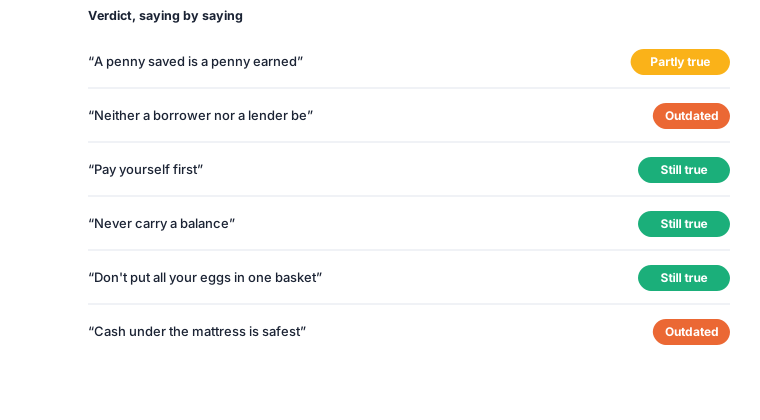 The verdicts, at a glance — the reasoning behind each one is below.
“A penny saved is a penny earned” — Partly true
Literally, this undersells savings — a penny saved and invested is worth more than a penny earned and taxed, once growth is factored in. But it also glosses over inflation: a dollar saved today and left in cash is worth less in ten years, not the same. The instinct is right — every dollar you don’t spend is a dollar working for you — but “saved” only holds its value if it’s actually growing somewhere, not sitting still.
“Neither a borrower nor a lender be” — Outdated
Good advice for avoiding personal loans between friends. Bad advice as a blanket rule about debt. A mortgage, a reasonable auto loan, or financing that lets you build credit are tools, not moral failures — the actual question is whether the debt is priced fairly and fits your cash flow, not whether debt exists at all.
“Pay yourself first” — Still true
This is one of the few that has aged perfectly. Money earmarked for savings before it has a chance to get spent elsewhere gets saved; money you plan to save “if there’s anything left” at the end of the month usually isn’t there. Automating a transfer on payday does mechanically what willpower alone tends not to.
“Never carry a balance” — Still true
Credit card interest is high enough that carrying a balance almost always costs more than whatever cash flow relief it briefly provides. The exception people cite — building credit — only requires using a card, not carrying debt on it month to month.
“Don’t put all your eggs in one basket” — Still true
Diversification predates modern finance and still describes it accurately: any single investment, employer, or income source going wrong shouldn’t be able to take out your entire financial position. The saying is older than the term “diversification,” but it’s the same idea.
“Cash under the mattress is safest” — Outdated
It feels safe because it feels certain, but certainty isn’t the same as safety. Cash held outside a bank earns nothing, loses value to inflation every year it sits there, and isn’t protected the way a deposit account is. What actually made this saying feel true wasn’t the cash — it was knowing exactly how much you had and being able to see it. That part’s worth keeping. The mattress isn’t.
The sayings that hold up share a pattern: they’re all really about consistency and visibility — paying yourself first, not overcommitting to one bet, knowing where your money stands. That’s the same principle behind forecasting your cash flow instead of guessing at it. Tally gives you that visibility automatically, tracking your bills and projecting your balance forward, so “pay yourself first” is something you can actually confirm you can afford — not just something you hope works out.