
When Mint shut down, most of the migration advice was about replacing its budgeting and categorization features — apps that would sort your spending into pie charts and track it against a monthly plan. For a lot of former Mint users, that’s not actually what they miss.
What Mint was quietly good at, almost by accident, was giving you a sense of where you stood. Checking it before a big purchase, seeing the trend line, getting a rough read on whether you were okay this month — that’s a forecasting habit, even if Mint itself never truly forecasted anything. It just showed history.
Budgeting apps solve the wrong half of the problem
Most Mint replacements are built the same way Mint was: categorize what already happened, compare it to a monthly plan, show a pie chart. That’s useful for understanding spending habits. It does nothing to answer the question that actually causes financial stress: is my balance going to dip before my next paycheck?
That question requires looking forward, not backward. It means tracking your recurring bills and projecting your balance day by day — closer to a cash flow forecast than a budget.
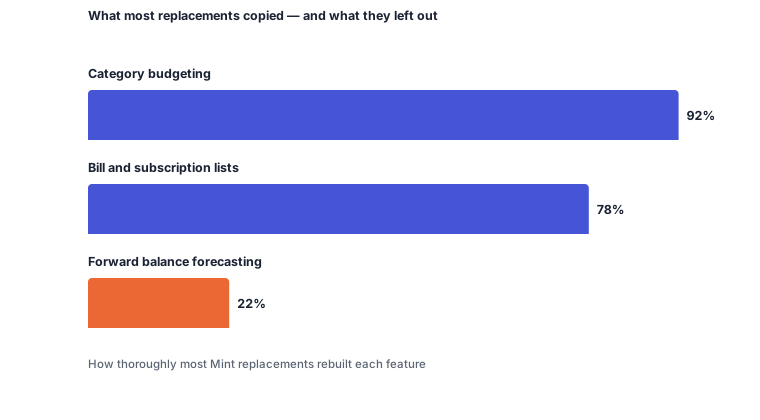 Most replacements copied the parts of Mint that were easiest to rebuild — not the part people actually relied on.
What to actually look for in a replacement
If seeing problems coming is what you relied on Mint for, look for a tool that:
- Projects forward, not just backward — a running balance projection, not a spending history dashboard.
- Keeps your bill list current, so the projection stays accurate as bills change instead of drifting out of date.
- Warns you before a shortfall, not after a charge has already cleared.
Tally is built specifically for that gap — it’s not a Mint clone with categories and pie charts, it’s a forecast: your recurring bills tracked in one place, income timing accounted for, and your balance projected forward so a dip shows up as a warning instead of an overdraft.