
Most people manage cash flow the same way: check the balance, do quick mental math on what’s left before payday, and hope nothing unexpected lands in between. It works right up until it doesn’t — an annual renewal, a bill that moved a few days, or a payday that lands late.
A cash flow forecast fixes this by projecting your balance forward, day by day, instead of just showing where it sits today. Once you can see the dip before it happens, you stop reacting to your bank account and start planning around it.
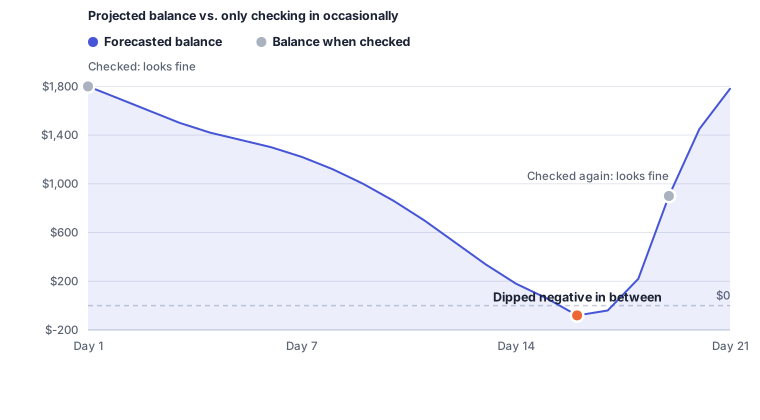 Checking in occasionally shows a fine number on both ends. Only the forecast shows what happened in between.
What a real forecast needs
A forecast is only useful if it accounts for the things that actually move your balance:
- Recurring bills — rent, subscriptions, loan payments, anything on a schedule, including irregular cadences like biweekly or semimonthly.
- Income timing — payday isn’t always the same date every month, and a forecast has to track that instead of assuming a flat 30-day cycle.
- Typical spending — groceries, gas, the everyday stuff that doesn’t show up on a bill list but still moves the number.
Spreadsheets can technically do this, but they go stale the moment a bill date shifts or a new subscription shows up, and nobody updates a spreadsheet in real time.
What it looks like in practice
This is exactly the gap Tally is built to close. Add your recurring bills once, and Tally tracks them alongside your actual spending patterns and projects your balance payday to payday from then on — so a dip shows up as a warning on a screen instead of a surprise at checkout.