
Overdraft fees rarely happen because someone spent money they didn’t have on purpose. They happen because of timing: a bill clears a day earlier than expected, a paycheck lands late, or two payments that are normally spread apart land on the same day. The balance looks fine on Monday and is negative by Wednesday, and nothing about Monday’s number gave any warning.
Why checking your balance doesn’t help
Checking your balance tells you where things stand right now. It says nothing about the three bills scheduled to hit over the next four days. That’s the core problem with reacting to a balance instead of planning around one — by the time the number looks wrong, the charge that caused it is often already in motion.
Seeing the dip before it happens
The fix isn’t checking more often — it’s looking forward instead of at today. A cash flow forecast projects your balance across the coming days based on bills that are actually scheduled to come out, so a shortfall shows up as a warning several days out instead of a surprise at checkout.
A few things make that projection worth trusting:
- Every recurring bill accounted for, including ones with irregular timing, like a quarterly payment or a subscription that renews annually.
- Real income timing, not an assumed monthly average — payday isn’t always the same date, and a forecast has to track that.
- A buffer for everyday spending, so the projection isn’t thrown off the first time you buy groceries.
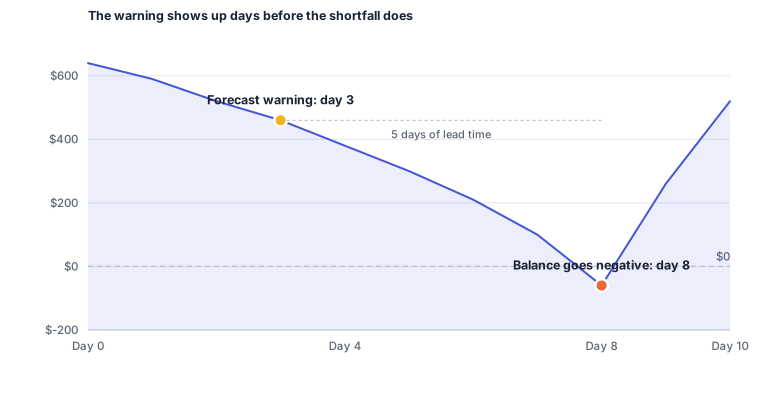 The dip doesn’t happen until day 8. The forecast flags it on day 3 — while there’s still time to act.
What it looks like in practice
Instead of a static balance, you get a running projection: today’s number, and where it’s headed over the next couple of weeks. If a dip below zero is coming, it shows up now, while there’s still time to move money, delay a purchase, or shift a bill’s due date.
This is the specific problem Tally is built to solve — it tracks your recurring bills, factors in real income timing, and forecasts your balance payday to payday, so an overdraft shows up as a warning on a screen days before it would ever show up as a fee.