
It’s possible to stay under budget in every single category for the whole month and still overdraft. That’s not a failure of willpower — it’s a gap in what most budgeting apps were ever built to track.
What a budgeting app actually tracks
Most budgeting apps are built around categories and totals: how much you’ve spent on groceries this month, how much is left in “dining out,” whether your total spending is under your total income. It’s a month-to-date view, and it’s genuinely useful for one specific question — am I spending too much, overall, on the things I’m spending on?
The gap categories can’t see
That question says nothing about order. A budget that’s perfectly balanced by month-end can still produce a negative balance on the 12th, if rent, a car payment, and a subscription renewal all land in the same three-day window while your paycheck is still a week out. The category totals never show this, because a category total doesn’t know or care what day anything happened — it just adds everything in the bucket, regardless of when.
This is the same reason Mint’s shutdown left a real gap for a lot of people: most of what replaced it copied the category-and-total model, which was never the part that predicted a shortfall in the first place.
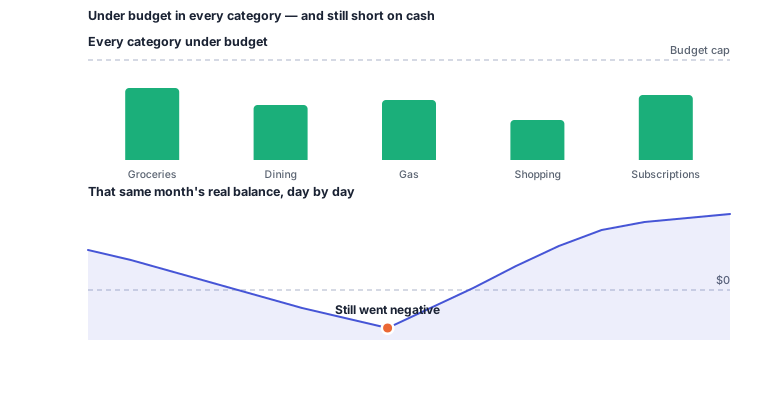 Every category came in under budget. The balance still went negative — categories can’t see when charges land.
What closes the gap
Cash flow forecasting answers a different question: not how much, but when. It projects your balance day by day using actual bill due dates and actual paydays, so a tight stretch shows up as a dip on a specific date — even in a month where the totals, added up at the end, would have looked completely fine.
Categories and forecasting aren’t competitors; they’re answering different halves of the same problem. But if you’ve ever stayed under budget and still gotten hit with an overdraft fee, the half you were missing was timing, not spending. Tally tracks your recurring bills and forecasts your balance forward day by day, so a dip shows up before it happens — not as a number you reconstruct afterward wondering what went wrong.